How Lactate Alters the Anion Gap Formula
What Is the Anion Gap?
The anion gap is a calculated value that assists clinicians consider the balance of charged particles in the blood. It is based on common electrolytes measured in a blood chemistry panel, especially sodium, chloride, and serum bicarbonate. In simple terms, the calculation shows the difference between the positively charged ions and the negatively charged ions that are routinely reported by the lab.
An Anion Gap Calculator is a practical way to do this lab interpretation quickly. The result can help identify an elevated anion gap, which often points toward a metabolic problem involving extra acids in the https://anion-gap-tool058.publishlane.com/posts/how-to-operate-an-anion-gap-calculator-for-electrolyte-values bloodstream. A normal result does not always rule out disease, but it does inform the differential diagnosis and the next steps in evaluation.
The basic physiologic explanation is that the body maintains acid-base balance through a carefully regulated buffering system. When acid accumulates or bicarbonate falls, the anion gap can change. Potassium is sometimes included in certain formulas, but most clinical use focuses on sodium, chloride, and bicarbonate. Changes in albumin also matter because albumin is a major unmeasured negative charge in the blood.
Because the calculation reflects what is and is not measured directly, it is best understood as a hint rather than a diagnosis. It can reveal an electrolyte imbalance, suggest a hidden source of acidic metabolites, or indicate a broader metabolic derangement that needs closer review.
In What Way Does Lactate Change the Anion Gap?
Lactate is one of the major causes of a high anion gap because it is associated with lactic acid and lactic acidosis. As the body produces more lactate than it can clear, acid accumulates and depletes bicarbonate. That decrease of bicarbonate contributes to metabolic acidosis, and the remaining negatively charged lactate helps raise the anion gap.
This occurs because lactate is not just a byproduct; it is part of a larger physiologic response to low oxygen delivery, impaired perfusion, or altered metabolism. In states of cellular hypoxia, tissues shift toward anaerobic metabolism, and lactate accumulation increases. The result can be a increasing gap along with worsening clinical signs of illness.
However, the relationship is not perfectly linear. A patient may have substantially elevated lactate with only a modest change in the anion gap. That is why, the clinical significance of lactate should be judged alongside symptoms, hemodynamics, and other lab values. The gap may be affected by other variables at the same time, including albumin, renal handling of acids, and overall metabolic state.
Practically speaking, lactate helps explain why a patient with an elevated anion gap may have worsening acidosis even before the source is obvious. Lactate is therefore both a diagnostic marker and a marker of severity assessment in many acute settings.
Why Is Lactic Acid Considered an Not Directly Measured Anion?
The anion gap is built around the idea of unmeasured anions. The lab lists common ions such as sodium, chloride, and bicarbonate, but it does not directly report every charged substance in the blood. Lactate can increase as a negative ion and stay outside the standard routine calculation, which is why it is treated an unmeasured anion in this context.
When lactate rises, bicarbonate often falls because it cushions the excess acid. That shift alters the measured portion of the chemistry panel while leaving the extra lactate “hidden” unless a serum lactate test is ordered. This is a key part of acid-base balance assessment: the gap expands because the measured bicarbonate drops and the unmeasured acid load grows.
Albumin also has a major role in this discussion. It is one of the largest normal unmeasured anions, and low albumin can mask an otherwise abnormal gap. In other words, a patient may have clinically important lactate-related acidosis without a dramatic gap if albumin is reduced. This is one reason the Anion Gap Calculator is most useful when interpreted in context rather than in isolation.
From a physiologic standpoint, the gap reflects the balance between measured cations and measured anions, plus all the unmeasured species that contribute to the body’s overall charge. Lactate is important because it represents a real alteration in chemistry, not just a number on a screen.
When Is Lactate Be Checked in a High Anion Gap?
The lactate level should be measured whenever high anion gap metabolic acidosis is present and the cause is not obvious. It is commonly ordered when the presentation suggests sepsis, shock, or tissue hypoxia. Such problems may swiftly compromise perfusion and oxygen delivery, leading to lactate buildup and worsening acidosis.
High-risk situations include hypotension, altered mental status, fever with signs of organ dysfunction, severe infection, and evidence of poor end-organ perfusion. In these settings, lactate can help identify ongoing stress before more dramatic laboratory abnormalities appear. It is also useful in critical illness, where metabolic changes evolve quickly and the source of acidosis may be multifactorial.
Even if the anion gap is only mildly elevated, lactate testing may still be appropriate if the patient looks ill. A normal, or close to normal, gap cannot eliminate lactate-related pathology. That is especially true early in illness, when the body’s compensatory mechanisms and renal compensation may temporarily blunt the lab pattern.
Put simply, lactate should be checked when the clinical picture and the chemistry panel do not fully match, or when the risk of tissue-level oxygen debt is high. The number helps confirm whether the problem is a perfusion-related metabolic issue, a toxin, renal failure, or another cause of acidosis.
How to Analyze Lactate Alongside Anion Gap Results
The most useful interpretation results from combining the arterial blood gas, serum lactate, base excess, and blood chemistry panel. Each result adds a different layer of information. The chemistry panel shows the anion gap and bicarbonate level, the arterial blood gas defines pH and respiratory compensation, and the base excess helps quantify the metabolic component of the disorder.
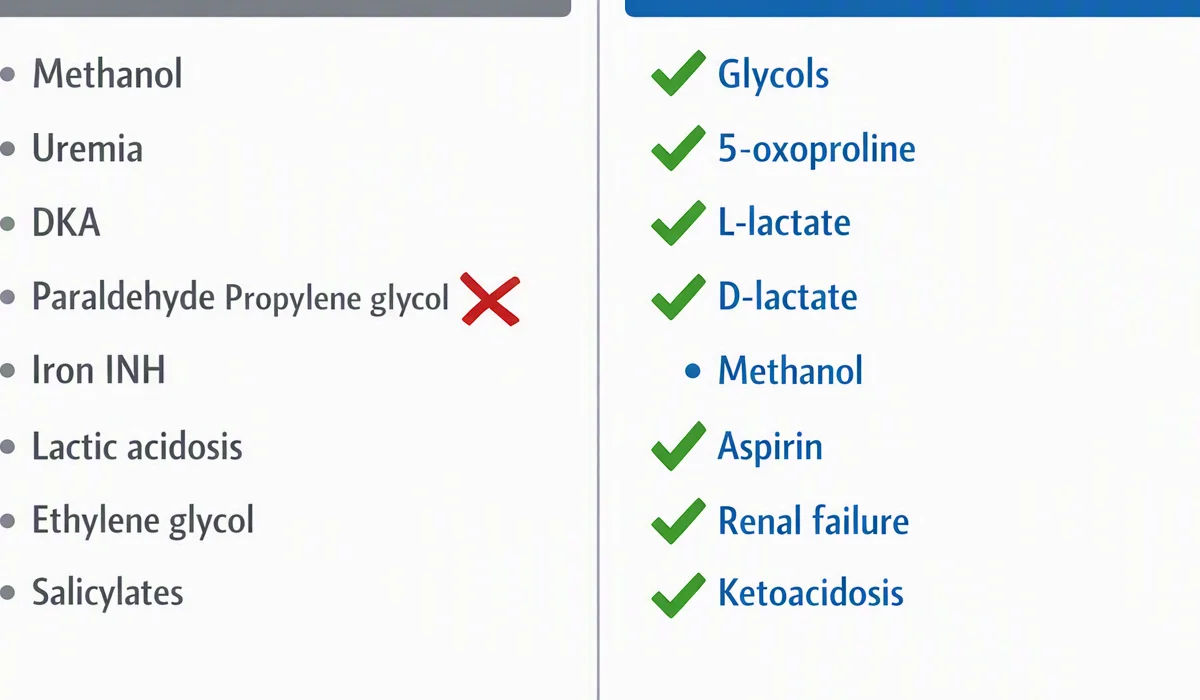
If the anion gap is elevated and lactate is also high, the connection is direct: lactate is likely contributing to the acidosis. If the gap is high but lactate is normal, other causes of unmeasured acids should be considered. These may include renal failure, ketoacidosis, toxins, or less common metabolic conditions.
When lactate is high but the anion gap is not markedly abnormal, the result still matters. This can occur at an early stage, with low albumin, mixed acid-base disorders, or simultaneous chloride changes that blunt the gap. It can also reflect a situation where lactate is elevated, but the total accumulation is not yet enough to cause a dramatic change in the measured electrolytes.
Lab interpretation should therefore follow a pattern rather than a single cutoff. Ask whether the patient has evidence of poor perfusion, hypoxia, infection, or organ dysfunction. Ask whether the anion gap is being influenced by albumin or other unmeasured anions. Then use the numbers to support the bedside picture rather than replace it.
A practical approach is this:
- Review the anion gap and bicarbonate on the chemistry panel.
- Check the arterial blood gas for pH and compensation.
- Order serum lactate when the cause of acidosis is unclear or the patient is unstable.
- Determine whether renal failure, medication effects, or mixed disorders are changing the pattern.
This combined approach improves the clinical significance of the result and helps distinguish true metabolic deterioration from a misleading isolated number.
Common Causes of High Lactate
One of the most common causes of elevated lactate is hypoperfusion. When blood flow is inadequate, cells get less oxygen and generate more lactate. That is why lactate is an important indicator in shock states, marked dehydration, and circulatory compromise. It points to an oxygen delivery problem rather than just a test abnormality.
Exercise can also raise lactate, usually in a transient and expected way. In this situation, the increase is typically short-lived and resolves as perfusion and oxygen delivery catch up with energy demand. The biologic explanation is different from critical illness, but the lab finding may seem similar at first look.
Medications can likewise be responsible. Some drugs impair mitochondrial metabolism, affect oxygen handling, or influence liver function in a way that leads to lactate buildup. A detailed drug history is part of the differential diagnosis whenever lactate is unexpectedly elevated.
Liver dysfunction is important because the liver is a major site of lactate removal. If the liver cannot process lactate effectively, the level may remain elevated even if the original trigger resolves. This can cloud assessment of severity because the lab result may reflect both excess production and slower elimination.
Renal failure is also relevant because impaired kidney function can lead to acid buildup and make metabolic acidosis worse. Although lactate is not primarily cleared by the kidneys, impaired acid handling by the kidneys and impaired compensation can intensify the overall metabolic picture. The final result may be a more markedly elevated anion gap or a combined disorder that looks less straightforward than expected.
Additional causes of elevated lactate include severe infection, hypoxia, seizures, and toxin exposure. The key point is that lactate is not a diagnosis on its own. It is a marker that helps identify where the body’s metabolic stress is coming from and how significant it may be.
Frequently Asked Questions on Lactate & Anion Gap Calculation
How does lactate in anion gap calculation?
Lactate acts as an unmeasured anion that can increase the anion gap when it accumulates in the blood. As it is not shown on the routine chemistry panel, it may appear as part of a high anion gap metabolic acidosis. The Anion Gap Calculator can identify this pattern, but clinical interpretation still depends on the full picture, including serum bicarbonate, albumin, and the patient’s condition.
Does lactate necessarily increase the anion gap?
Not always. Lactate does not always cause a clearly elevated anion gap. The gap can be influenced by albumin, other unmeasured anions, chloride shifts, renal compensation, and timing of the blood draw. A patient may have significant lactate accumulation with only a mild or even normal gap, especially early in illness or with a mixed acid-base disorder.
Is it possible to have high lactate with a normal anion gap?
Yes, it can. This can happen when the rise in lactate has not yet significantly changed the measured electrolytes, or when low albumin and other factors blunt the gap. It can also occur with mixed acid-base states that counterbalance the expected pattern. That is why lactate should be interpreted with the arterial blood gas, blood chemistry panel, and clinical context rather than by the gap alone.
What is the method for measuring lactate in lab testing?
Lactate is measured with a serum lactate test, usually drawn from blood and analyzed by the laboratory. In many cases it is ordered alongside an arterial blood gas and a blood chemistry panel when metabolic acidosis is suspected. The result helps identify whether lactic acidosis is contributing to the acid-base disturbance and whether ongoing tissue hypoxia or hypoperfusion may be present.
When does a high anion gap warrant a lactate test?
A high anion gap should prompt a lactate test when the cause is not obvious, when the patient is unstable, or when there are signs of sepsis, shock, or tissue hypoxia. It is also appropriate when the differential diagnosis includes critical illness, renal failure, toxin exposure, or other metabolic disorder concerns. In these cases, lactate provides important clinical interpretation and helps guide the next steps in evaluation and treatment.