Anion Gap Calculator for Precise Acid-Base Analysis
What the Anion Gap Assesses
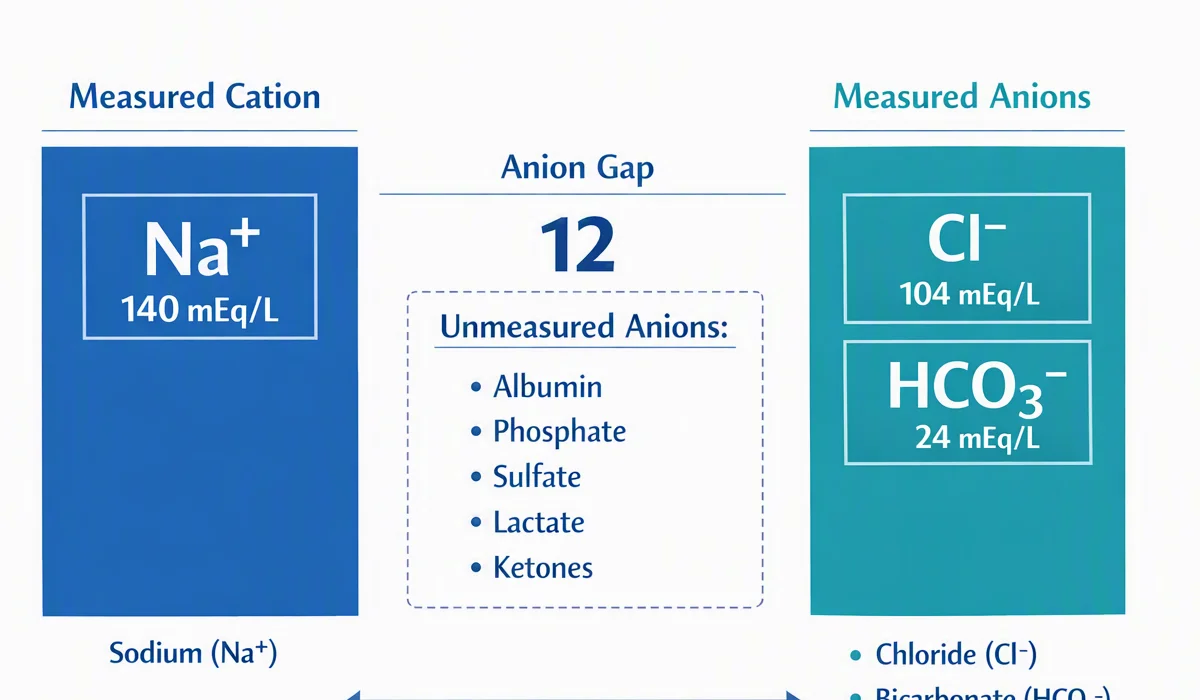
The anion gap is a helpful part of acid-base evaluation because it assists healthcare providers and students understand how the main electrolytes interact to one another in the blood. It is not a direct measurement of a single substance. Instead, it is a calculated value derived from standard serum chemistry tests that reflects the equilibrium between measured cations and measured anions.
In clinical terms, the anion gap can help identify whether a patient has an acid-base disorder, especially metabolic acidosis. When the body builds up acids or loses bicarbonate, the chemistry panel changes in predictable ways. An elevated or abnormal gap can point toward hidden acids, also called unmeasured anions, that are not directly listed on a standard electrolyte panel.
The most relevant measured values in this calculation are sodium, chloride, and bicarbonate. Some formulas also include potassium, though many clinical settings leave it out for simplicity. Because the result is derived from routine serum electrolytes and other blood chemistry data, the anion gap serves as a quick diagnostic tool during patient assessment.
An Anion Gap Calculator makes it easier to calculate anion gap values efficiently and accurately. That can support a clearer understanding of the cause of acidosis, whether the issue is a simple bicarbonate loss, an excess acid load, or another process affecting the body’s acid-base balance.
How to Work With the Anion Gap Calculator
To operate an Anion Gap Calculator, add the serum values for sodium, chloride, and bicarbonate from the lab report. These values are usually measured in milliequivalents per liter, and the calculator applies the standard formula to generate the result.
Most calculator tools are designed for quick bedside review or educational use. They assist convert a basic blood chemistry panel into a more meaningful metabolic acidosis evaluation. If you also have the albumin level available, a more advanced calculator may enable you to correct for albumin and produce a corrected anion gap.
Here is the usual process:
- Input the sodium value from the lab report.
- Input chloride and bicarbonate values from the same sample if possible.
- If needed: input potassium if the calculator includes it.
- If needed: input albumin if you want a corrected value.
- Compare the result against the expected reference range or normal range.
For reliable interpretation, the numbers should come from the same blood draw whenever possible. Changes in timing, fluid status, or treatment can affect the result. The calculator is most useful when paired with the rest of the clinical picture rather than used as a standalone answer.
Anion Gap Equation and Computing Steps
The standard anion gap formula is:
Na minus Cl minus HCO3
In expanded form, that means:
Anion gap = sodium - chloride - bicarbonate
Some providers include potassium in the calculation:
Anion gap = sodium + potassium - chloride - bicarbonate
This approach may produce a slightly higher result, but both methods are used in practice. The important point is to know which method the calculator is using so the interpretation matches the calculation.
To determine the value stepwise:
- Begin with the sodium value.
- Deduct chloride.
- Deduct bicarbonate.
- When potassium is included, add potassium before subtracting chloride and bicarbonate.
Calculation example: If sodium is 140, chloride equals 102, and bicarbonate is 24, the calculation would be 140 - 102 - 24 = 14. If potassium is included at 4 as well, then 140 + 4 - 102 - 24 = 18.
This basic math can help identify an elevated anion gap, but interpretation depends on the lab’s procedures and the patient’s overall status. A result that seems abnormal should always be considered in the setting of clinical symptoms, medications, and other lab results.
Expected Anion Gap vs Increased Anion Gap
A normal anion gap usually indicates that the equilibrium between measured cations and anions is within the expected reference range. That doesn't necessarily mean the patient is normal, but it may imply that the acidosis, if present, is due to bicarbonate loss rather than accumulation of unmeasured acids.
A elevated anion gap is more concerning because it often indicates the presence of extra acids in the bloodstream. This pattern is classically https://anion-gap-calculator330.image-perth.org/what-s-the-typical-urine-anion-gap-range seen in high anion gap metabolic acidosis, where acids build up and bicarbonate drops as the body tries to counteract the acid load.
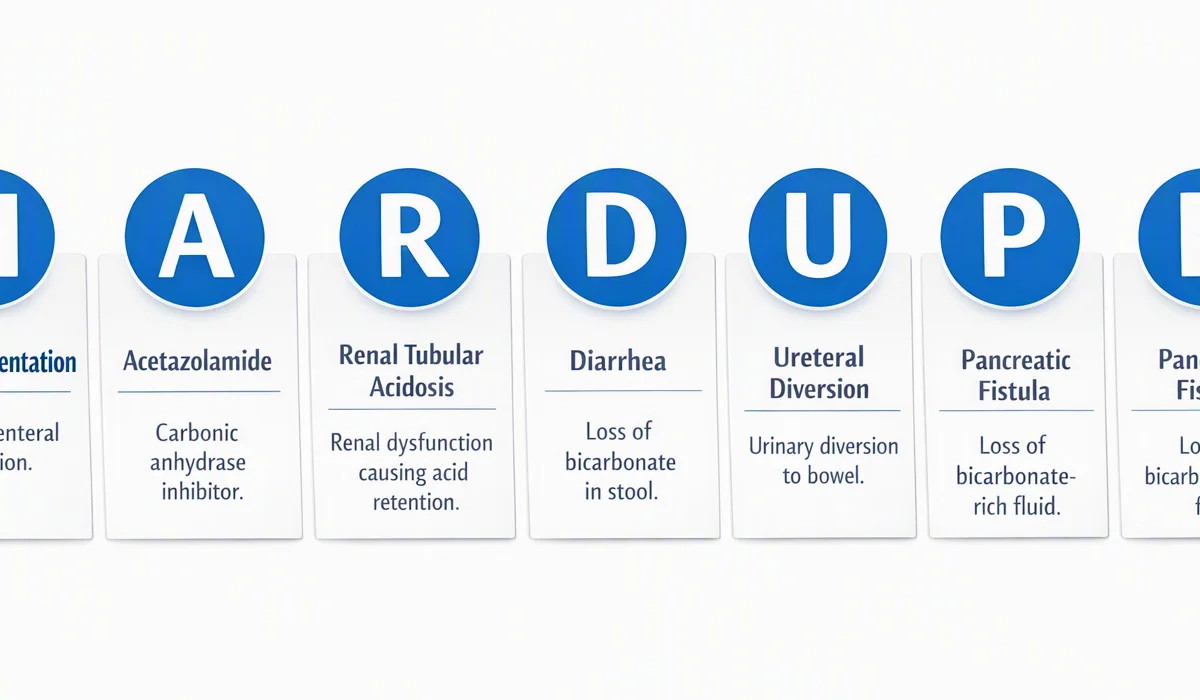
Grasping the difference is central to metabolic acidosis workup. A normal gap can be associated with intestinal losses, renal tubular issues, or bicarbonate loss. A high gap more often suggests hidden acid accumulation from conditions such as lactic acidosis, ketoacidosis, or kidney-related causes.
The anion gap is not a diagnosis by itself. It is a clue. The result should inform additional testing and support broader clinical reasoning rather than take the place of it.
Adjusted Anion Gap & Albumin Adjustment
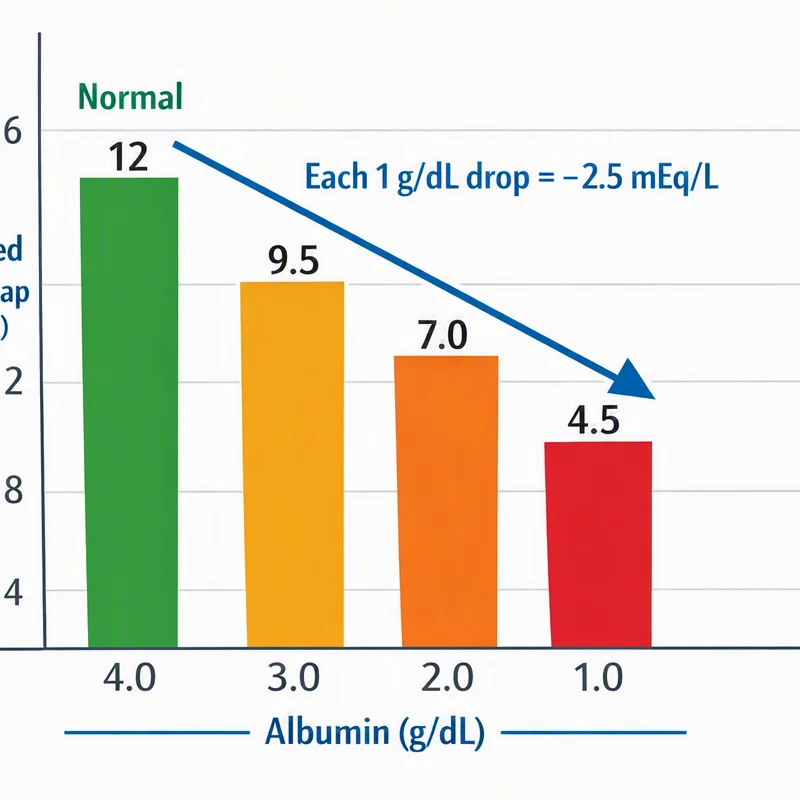
Albumin is a key not directly measured anion in blood, so decreased albumin can make the measured gap look reduced than it really is. This is why many of the clinicians use a corrected anion gap when hypoalbuminemia is present.
If albumin is reduced, the usual gap may miss the severity of an acid-base problem. In that situation, the calculator may correct for albumin to more clearly reflect the underlying chemistry. This adjustment is especially important when interpreting lab results in severely ill patients or anyone with low protein levels.
Why does this matter? A patient can appear to have a standard anion gap even when excess acids are present if albumin is low enough. The corrected result can reveal a concealed high anion gap that would otherwise be missed.
Albumin adjustment improves clinical interpretation because it accounts for one of the primary contributors to the body’s electrical balance. In practice, corrected values are often clearer than the raw number alone, especially when evaluating suspected acid-base disturbances.
Typical Causes of High Anion Gap
An high anion gap usually means that the body has accumulated acids or other unmeasured charged substances. A number of conditions are commonly linked with this pattern, and recognizing them helps pinpoint the cause of acidosis.
Lactic acidosis is a leading cause. It occurs when lactate builds up due to poor oxygen delivery, shock, severe illness, or other stress states. Because lactate is an unmeasured anion, it drives the gap higher.
Ketone-related acidosis is another important cause. This may occur in diabetes, starvation, or alcohol-related states, where ketone bodies accumulate and alter the acid-base balance.
Uremic buildup from reduced kidney function is also important. In severe kidney failure, acids are not cleared effectively, and retained toxins add to a higher gap.
Other causes can include toxins, medications, and metabolic conditions that increase acid production or impair acid elimination. The main point is that a high gap should prompt a search for hidden acid generation or poor clearance rather than a narrow focus on the number itself.
How to Understand Results in Clinical Context
Interpreting the anion gap correctly requires far more than a number. A solid clinical interpretation combines the gap with symptoms, vital signs, history, medications, and other lab values such as an arterial blood gas.
The arterial blood gas helps reveal whether the patient actually has acidemia or alkalosis, whether compensation is underway, and whether the primary disorder fits the chemistry panel. The anion gap then provides another layer by identifying whether the metabolic problem is likely due to excess acid or bicarbonate loss.
The delta gap is also valuable in more complex cases. It contrasts the change in the anion gap with the change in bicarbonate to look for mixed disorders. For example, a patient may have high gap metabolic acidosis along with a separate metabolic alkalosis or a concurrent normal gap acidosis.
This is why the Anion Gap Calculator is best considered as part of a broader workflow. It supports decision-making, but the final interpretation should integrate the complete acid-base picture, including the patient’s clinical status and any possible base deficit.
Limitations of Anion Gap Calculation
Although the anion gap is helpful, it has several limitations. One issue is lab variation. Different instruments, assay methods, and reporting practices can yield slightly different results, which means the reference range may vary by laboratory.
Another limitation is that the gap only shows measured and unmeasured anions indirectly. It does not identify the specific acid responsible. A high value may indicate a disorder, but it cannot distinguish between lactic acidosis, ketoacidosis, or other causes without additional context.
Electrolyte measurement problems can also affect accuracy. Severe electrolyte disorders, changes in protein concentration, or unusual blood chemistry patterns may distort the result. In addition, the presence of certain ions can change how the gap appears even if the true acid burden has not changed dramatically.
Because of these limits, the anion gap should be used as a segment of a complete acid-base disorder evaluation. It is a helpful clue, but not a definitive answer. The ideal use of the calculator is to guide thoughtful interpretation of lab results, not to replace clinical reasoning.
FAQ About the Anion Gap Calculator
What is an anion gap calculator used for?
An Anion Gap Calculator is used to determine anion gap values from routine lab results and assist with acid-base evaluation. It is especially valuable in metabolic acidosis evaluation because it can assist in identifying whether the problem is related to hidden acids, bicarbonate loss, or another acid-base disorder.
What is the normal anion gap range?
The reference range for the normal anion gap differs by laboratory and by whether potassium is included in the formula. In general, many labs regard a value in the low to mid-teens to be normal, but the exact range should always be assessed using the reporting lab’s stated normal range.
How do you calculate the anion gap from lab values?
Use the standard anion gap formula: sodium - chloride - bicarbonate. Some versions include potassium before subtracting chloride and bicarbonate. The calculator performs this step directly using the provided serum electrolytes, making it easier to assess blood chemistry results quickly.
Why do you correct the anion gap for albumin?
You correct for albumin because low albumin can mask a true gap elevation. In hypoalbuminemia, the measured value may seem normal even when unmeasured acids are present. A corrected anion gap gives a more accurate picture of the patient’s acid-base status.
What conditions cause a high anion gap?
Common causes of a high anion gap include lactic acidosis, ketoacidosis, and uremia. Severe renal failure, toxins, and other causes of retained acids can also cause an elevated value. The result should always be interpreted in the context of the full clinical picture and any associated arterial blood gas findings.